
Once this has been completed, a post-closing trial balance will be reviewed to ensure accuracy. As the next accounting period starts, reopen the permanent accounts by placing their balance to their normal sides. After all income statement accounts are closed to the income and expense summary account, the latter’s balance will determine whether there is net income or net loss.
What are Closing Entries in Accounting?
- Apart from the guidelines, there are strict auditing rules to protect and ensure the integrity of the numbers being reported for any accounting period.
- This is no different from what will happen to a company at theend of an accounting period.
- Their balances carry over into the next accounting period, providing a continual financial narrative.
- After preparing the closing entries above, Service Revenue will now be zero.
- Thus, the income summary temporarily holds only revenue and expense balances.
- By avoiding these common mistakes, companies can ensure the accuracy and integrity of closing entries, preventing errors in financial reporting and maintaining the trust of stakeholders.
- This means you are preparing allsteps in the accounting cycle by hand.
They are prepared at different stages in the accounting cycle but have the same purpose – i.e. to closing entries test the equality between debits and credits. Before creating your final report, generate a trial balance, and if things are not adding up, check your work and enter adjusting entries until you are ready to create the final financial statement. One of the first steps in preparing for year-end closing is to ensure that all transactions for the year have been entered and are up-to-date.
Characteristics of the Income Summary Account:
The above entry decreases the balance of retained earnings account. The above entry increases the balance of retained earnings account. Businesses typically prepare, post, and document hundreds or thousands of recurring and nonrecurring entries each period. A reliance on traditional processes introduces unnecessary risk, slows down reporting, and poses downstream audit testing challenges. To calculate net profit, the business would subtract the value of the expenses from the value of total sales revenue. The net sum of $100,000 minus $45,000 leaves the business with a profit of $55,000.
- For our purposes, assume that we are closing the books at theend of each month unless otherwise noted.
- Now that we have closed income and expenses, we need to move the balances from the income summary to retained earnings.
- For example, real estate property does not directly impact profitability, but it impacts the overall financial picture of the business.
- Provide the web link to the company’s Form 10-K, to allow accurate verification of your answers.
- These errors can result in inaccurate financial reporting and misrepresentation of the company’s financial position.
Close Revenue to Income Summary
Closing the Income Summary ensures that revenues and expenses don’t remain on the books, and the results flow into equity. The first step in preparing a closing entry is to move all balances from revenue accounts into the Income Summary account. This includes sales revenue, service revenue, and any other income earned during the period.

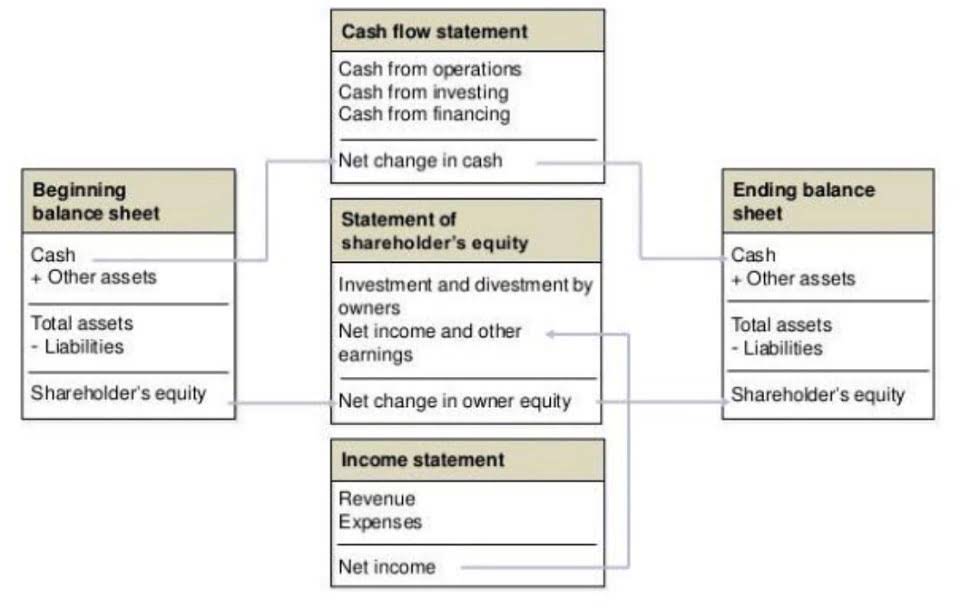
Thus, the income summary temporarily holds only revenue and expense balances. For example, real estate property does not directly impact profitability, but it impacts the overall financial picture of the business. Throughout the time that it is owned by the business, it will be reported as a long-term asset, and it will carry over from one reporting period to the next. (Figure)Explain what is meant by the term nominal accounts (also known as temporary accounts). The income statement summarizes your income, as does income summary. If both summarize your income in the same period, then they must be equal.
- Imagine you own a bakery business, and you’re starting a new financial year on March 1st.
- These accounts carry their ending balances into the next accounting period and are not reset to zero.
- The income summary account is a temporary account solely for posting entries during the closing process.
- The temporary accounts are now ready to gather data for the next accounting period, which will be distinct from the data from previous periods.
- Accurate closing entries are crucial for providing stakeholders with a clear financial picture of the organization’s performance.
What’s the Difference Between a Closing Entry and an Adjusting Entry?

The income summary account must be credited and retained earnings reduced through a debit in the event of a loss for the period. A closing entry transfers data from temporary to permanent accounts on an income statement to a balance sheet when the accounting period ends. This means that it is not an asset, liability, stockholders’ equity, revenue, or expense account. The account has a zero balance throughout the entire accounting period until the closing entries are prepared.
This process transfers balances to permanent accounts such as retained earnings or capital, ensuring accurate records and preparing the books for the next period. Whether done manually or using software, closing entries help maintain clear and compliant financial reporting. Closing entries, also known as closing journal entries, are the final steps taken at the end of an accounting period to transfer the balances of temporary accounts to permanent accounts.

Temporary and Permanent Accounts

In accounting, bookkeepers and accountants often refer to the process of closing entries as closing the books. Closing entries accounting involves making closing journal entries at the end of accounting periods. This process transfers balances from temporary to permanent accounts, highlighting when closing entries are made for accurate financial reporting. In this part, we’ll take you through a comprehensive guide on closing entries.
Enhanced Financial Clarity: Automated Solutions and Advanced Techniques
The finale of the closing entries saga is the transfer from the Income Summary to the Retained Earnings account. If your company has been successful, and Online Bookkeeping expenses haven’t swallowed up your revenues, you’ll see a net profit looking back at you from the Income Summary account. Straight into the Retained Earnings account, reinforcing the financial foundation of the company. Keep in mind, one of the practical takeaways is consistency in this process to maintain accuracy in your financial records. The retained earnings are calculated after taxes have been accounted for, which are a critical financial consideration for any business.
Temporary vs. Permanent Accounts: The Accounting Cycle Contingent
Closing entries help in the reconciliation of accounts which facilitates in controlling the overall financials of a firm. Net income is the portion of gross bookkeeping income that’s left over after all expenses have been met. The term can also mean whatever they receive in their paycheck after taxes have been withheld. Instead, as a form of distribution of a firm’s accumulated earnings, dividends are treated as a distribution of equity of the business. Provide an explanation to give to the CEO about what the entries reveal about the company’s operations this year.